
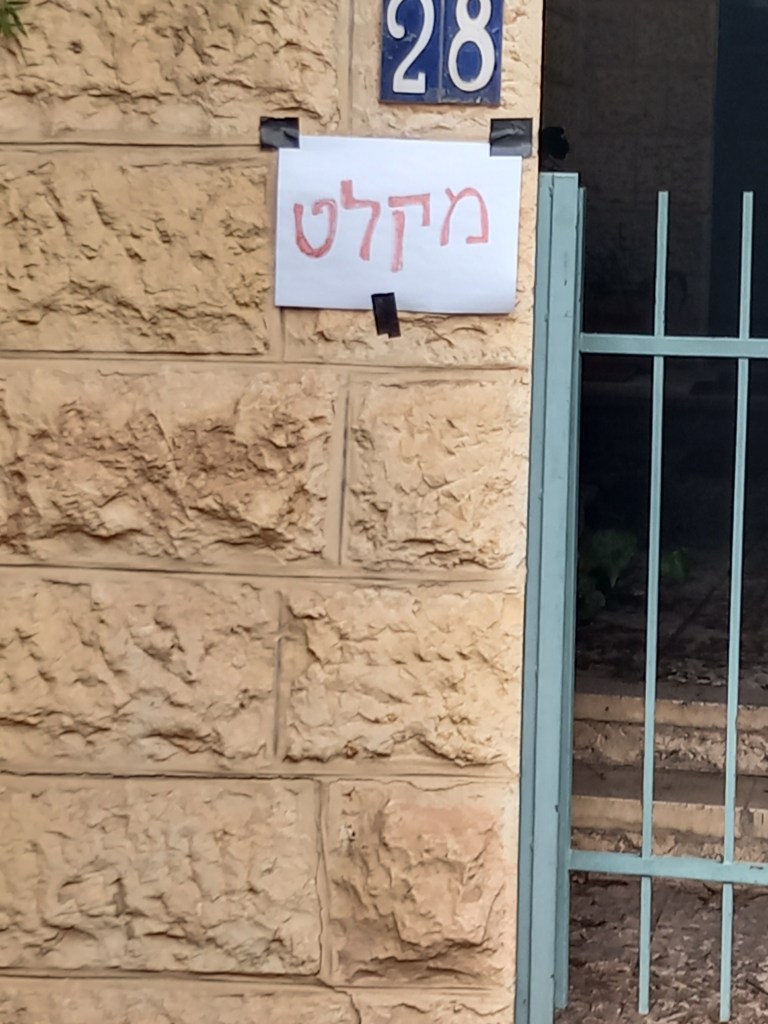
The Gates of the Law:
“I’ve had many ups and downs in my professional life” Reuben told me over coffee that morning, trying but not managing to smile, “Had my ups and downs I’d say, but this is the worst. They’ve really screwed me this time.”
He glared around the room angrily, and then looked back at me for a moment before taking a sip of his black brew. I wasn’t sure how to understand that glance. Was he showing a little vulnerability at last? Beneath that angry look of his I perceived a broken, defeated young man. He was obviously desperately in need of a friend. That much I knew from our phone conversation the day after he was fired yet again and asked to meet.
“Listen, Reuben,” I said, smiling as kindly as I could, “you are still young. I know this is a blow but, believe me, you will survive it. The law business is intense, cut throat, but I believe in your abilities. You just haven’t found your niche yet.”
“Professor Cohen, I appreciate you’re having taken the trouble to meet with me here in the university café, but you don’t understand. They just dumped me without a word of explanation. That’s so heartless and cruel. I had won a couple of cases for them. One of them made a splash, was in the papers. I was on top of the workload. I had sacrificed so much to make this job work and, then, boom, just like that they asked me to leave. How am I going to manage now? Who’ll give me a job after I’ve been sacked by Parker, Smith and Jones? They’re the best show in town here in Sydney, aren’t they?”
“Well, yes, Reuben, they do have quite a reputation, but perhaps you were just barking up the wrong tree. They are a high-powered property firm dealing with important cases that is true but…”
“I know all that” Reuben interrupted but still…”
“Please let me finish speaking, young man! You were a good student, Reuben, one of my best…” I said, smiling.
He nodded, his eyes softening as I continued talking, sadness slowly replacing anger in his dark eyes, his thick eyebrows meeting above them in a frown.
“But you were not very good at the social interaction in class as I remember; a little too cynical and sarcastic when speaking with your teachers and fellow students I think.”
Reuben glared at me as I spoke. I could see my own reflection in his glasses, no longer saw his eyes. The sun’s angle had changed.
I saw an elderly man there now, bearded and bald. I wondered how someone from my cloistered academic world, now stooped, and weighted with philosophical concerns and legal theory could help this upset, angry and confused young man. His brow was full of worry lines, lips tight with restrained rage and resentment.
“Let me tell you a story,” I said.
He sighed loudly, showed his impatience by drumming his fingers on the table as I spoke but I ignored that as best I could and continued:
“I once read a short story by the renowned Czech writer, Franz Kafka, called “Before the Law”, I said.”You must have heard of it.”
He managed a short snort of a yes, before returning to his annoying finger drumming. I noticed the ink stains on those long fingers of his.
“Well, in that story Kafka presents a paradox in which his protagonist, K, is waiting to enter through a gate in heaven that is locked. He is confronted by a gate-keeper who let’s no one through this gate, the gate of the law it’s called, including our hero K who waits there for years in the hope of getting through. K tries to bribe the gatekeeper repeatedly, giving him all he has. The man accepts the bribes but tells K he only accepts the bribes “so you do not think you have left anything undone.” K waits patiently until he is dying by the locked gate. Right before death…”
“Stop! Stop! I know how this story ends. What are you trying to tell me Professor Cohen?” Reuben’s voice was strained and higher pitched than usual, his face red.
“The message is clear, Reuben, is it not? There is one gate awaiting you but it will only open for you if you approach it in the right way. Bribes could not help K. Continuing as you have until now will not help you either. You have to change, learn some humility and rethink your approach to the law.”
Reuben stood up abruptly, went over to the counter by the cash register, paid for our drinks and turned to leave, saying as he strode out of the café, sarcastically:
“Thank you for your help, sir”
Years passed. I had already retired, enjoying my quiet after my long, successful academic career.
One morning the phone rang insistently. Rebecca picked up the receiver. I heard her say:
“Hello, who is this?
Then, “Yes, he is here. Hold on.”
She handed me the phone. A familiar voice addressed me on the other end:
“Hello, Professor Cohen, how are you?”
“Reuben?”
“Yes. It is I, indeed. I’m called Reuven now.”
“OK. How are you, Reuven?”
“I’m doing fine, sir.”
“And why do I have the honour of this call from you after all these years of silence. I remember well our unfortunate conversation in the university café long ago; how angry and frustrated you were.”
“That’s why I’m calling, sir.”
“Oh?”
“I want to apologize for my behavior then.”
“Apology accepted.”
“And to tell you that the story you told me that day…”
“Which story? My memory is not what it was, young man.”
Rebecca, on hearing me say that, smiled. I suppose the name of my star student from years before aroused her interest. Her ears had pricked up to listen in on our conversation.
“You know, the Kafka story, the one about the gate-keeper of the Law.”
“Ah, yes. I do remember that now.”
“I thought about it long and hard after that,” he said.
“I’m glad to hear that.”
“I’m calling you from Tel Aviv, sir.”
“Tel Aviv?”
“Your story changed my life. I realized that my place was not in Australia, that there might have been a little anti-Semitism involved in what happened to me back then, that I was the only Jew employed by that illustrious law firm that gave me the boot, that I’d been asked to consider changing my name but had refused at the time. I left on aliya not long after our conversation.”
“Oh. I’m not surprised by that.”
“Now I’m happy here in Israel.”
“Israel?…Well I’m glad to hear that you are doing well over there now. It’s not an easy country to live in, I know. Wars, terrorism, all that.”
“That’s true but my life is more meaningful now.”
“I understand, So…What branch of the law are you in?” I asked, anticipating a grand success story.
“Oh, I don’t practice law any more. Not here.
“And what do you do then?”
“I make a living here selling pizza.”
 A novel by Yehiel Grenimann